.webp)
Mortgage With Bad Credit

Yes, you can get a mortgage with bad credit, really. High-street banks tend to hear 'adverse credit' and quietly show you the door. Specialist lenders tend to invite you in, sit you down, and can even offer you a brew sometimes, before they hear the whole story, not just the one line that made everyone else nervous.
Bad credit isn't one-size-fits-all, and neither is our approach. It might be a missed payment from years back that you'd forgotten about. It might be a recent CCJ, an active IVA, or bankruptcy you've since discharged. Each one tells a different story, and we match your story to the lender who actually wants to hear it.
We're Bad Credit Queen, FCA-regulated, whole-of-market, and on first-name terms with specialist lenders you'll never spot on a comparison site. They don't advertise. We know where to find them anyway.
Consider this page your cheat sheet: what actually counts as bad credit, how it plays into your mortgage options, and exactly what to do about it.
What Counts as Bad Credit?
Bad credit and adverse credit mean the same thing. Both refer to negative marks on your credit file that make lenders view you as higher risk. But not all marks are equal and knowing exactly what sits on your file is the first step to knowing what you can do about it.
- CCJ (County Court Judgment). A court order issued when you have failed to repay a debt and the creditor has taken legal action.
- Default. A record added to your credit file when you have fallen significantly behind on a credit agreement, usually after three to six missed payments.
- Missed or late payments. Individual payment failures on credit agreements. These may or may not escalate to a default, but they appear on your file either way.
- IVA (Individual Voluntary Arrangement). A formal agreement to repay a portion of your debts over a fixed period, supervised by an insolvency practitioner.
- Bankruptcy. A legal process that writes off debts you cannot repay. It carries the most significant weight of any marker.
- DMP (Debt Management Plan). An informal arrangement where you repay debts at a reduced rate through a third party.
- Payday loan history. A history of using payday loans can flag higher risk to some lenders, even when all repayments were made on time.
Bad credit is a spectrum. A single late payment from three years ago is very different from a recent bankruptcy. The type, age, and severity of each issue all affect your options.
Can You Get a Mortgage With Bad Credit?
Bad credit does not automatically prevent you from getting a mortgage in the UK. The key is finding the right type of lender.
Specialist lenders exist specifically for people with adverse credit histories. Unlike high-street banks, they do not use automated scoring systems that reject anyone below a threshold. They assess each case on its own merits.
These lenders use manual underwriting. A real person reviews your full application, and the context of your situation is part of the decision, not an afterthought.
Six factors carry the most weight when a specialist lender reviews an adverse credit mortgage application:
Your options may be more limited than someone with clean credit, and your rate may be slightly higher. But mortgages are available and regularly approved for people in exactly this situation.
Does Your Credit Score Affect Your Mortgage Application?
Yes, but it is not the only factor, and with specialist lenders it is often not the decisive one.
One more thing worth knowing: the three UK credit reference agencies, Experian, Equifax, and TransUnion, can each show different scores and different information. It's worth checking all three before applying, since a lender may pull from any of them.
A low credit score does not mean a mortgage is impossible. It means you need the right lender, one who looks at the full picture, not a single number.
How Much Deposit Do You Need With Bad Credit?
The deposit you need depends on the type, severity, and recency of your credit issues. Deposit expectations fall into three broad tiers.
- Minor, older issues. A single missed payment from years ago, a small CCJ registered over three years ago, or a minor default satisfied long ago. A deposit of 5% to 10% may be possible with the right specialist lender.
- Moderate issues. A satisfied default, a CCJ registered over 12 months ago, or multiple missed payments from one to two years back. A deposit of 10% to 15% is more typical.
- Recent or severe issues. Recent unsatisfied defaults, a recent CCJ, an active IVA, or a recent bankruptcy discharge. A deposit of 15% to 25% is commonly required, and some cases need more.
The trade-off is straightforward. A larger deposit does two things at once. It opens up more specialist lenders who will consider you. And it usually results in better interest rates because the lender is taking on less risk.
If you cannot raise a large deposit right now, that does not mean a mortgage is impossible. It means the options are narrower. A broker can show you what is realistic based on your specific credit profile and deposit combination.
If your deposit situation is affected by a specific credit marker like a CCJ or default, our mortgage with a CCJ or default page covers the deposit expectations in more detail.
Will You Pay a Higher Interest Rate With Bad Credit?
Usually, yes. But the difference is smaller than most people expect.
Adverse credit mortgages typically carry rates between 0.5% and 2.5% higher than what clean credit borrowers pay at the same time. The exact premium depends on the severity of your credit issues and how much deposit you can put down.
Put that in context:
- A slightly higher rate is significantly better than having no mortgage at all
- It's far cheaper than paying unsecured debt interest rates on credit cards or personal loans
- Rates improve as credit issues age: what you pay today on a two-year fixed deal may be much lower when you remortgage, especially if your file has cleaned up in the meantime
A whole-of-market broker finds the most competitive specialist rate for your specific situation, not just the first rate that will accept you. That difference alone can save you thousands over the life of a fixed deal.
Want to know where you actually stand? Share your details with us and we will give you an honest picture of what is possible. No cost, no obligation, and no impact on your credit file.
How Long Does Bad Credit Affect Your Mortgage Chances?
Most adverse credit markers stay on your credit file for six years from the date they were registered, this applies to CCJs, defaults, IVAs, and bankruptcy alike.
Here's how your options typically change over that time:
- 0–12 months: Impact is strongest. Options are most limited, and lenders that do consider you will usually want a larger deposit.
- 2–3 years: A real turning point. Significantly more specialist lenders will consider your application as the risk profile improves.
- 6 years: The marker drops off your credit file entirely. It no longer appears on searches and does not affect future applications.
Impact fades gradually, not all at once, every month that passes improves your position slightly. You don't have to wait six years to apply; specialist lenders consider applications throughout the six-year period.
Waiting simply opens more options at better rates.
For a detailed breakdown of what changes at each stage, read our guide on how long a CCJ stays on your credit file.
What Bad Credit Situations Can Be Helped?
Most adverse credit situations can be helped with the right specialist lender. The route into a mortgage depends on which markers appear on your file and how they combine with your income and deposit.
- CCJs and defaults. The most common adverse credit markers. Specialist lenders assess the age of the CCJ or default, the amount, whether it has been paid off, and how it fits with your overall application.
For detailed information on this specific situation, see our mortgage with a CCJ or default page. - Missed and late payments. One of the most manageable credit issues. The pattern matters more than any single incident, and lenders distinguish between an isolated missed payment and a recurring one.
- IVA. A formal debt arrangement that stays on your file for six years. Mortgages during an active IVA are very difficult. After completion, specialist lenders can consider you, usually with a larger deposit and a waiting period.
- Bankruptcy. The most severe marker on a credit file. After discharge, specialist lenders can consider you, though deposit requirements and waiting periods are significant. Each lender sets their own criteria.
- DMP (Debt Management Plan). Lenders view an active DMP very differently from a completed one. A completed DMP with a clean track record since is more manageable and opens more lender options.
- Self-employed with bad credit. The combination of complex income and credit issues narrows the lender pool further, but it does not eliminate the options available to you.
If you are self-employed with bad credit, our dedicated self-employed bad credit mortgage page covers the income and lender requirements. - Existing homeowners wanting to remortgage. If your credit has worsened since your original mortgage, options still exist. A product transfer with your existing lender is often the easiest first step.
Existing homeowners should read our remortgage with bad credit page for specific guidance.
What Should You Do If You’ve Already Been Declined?
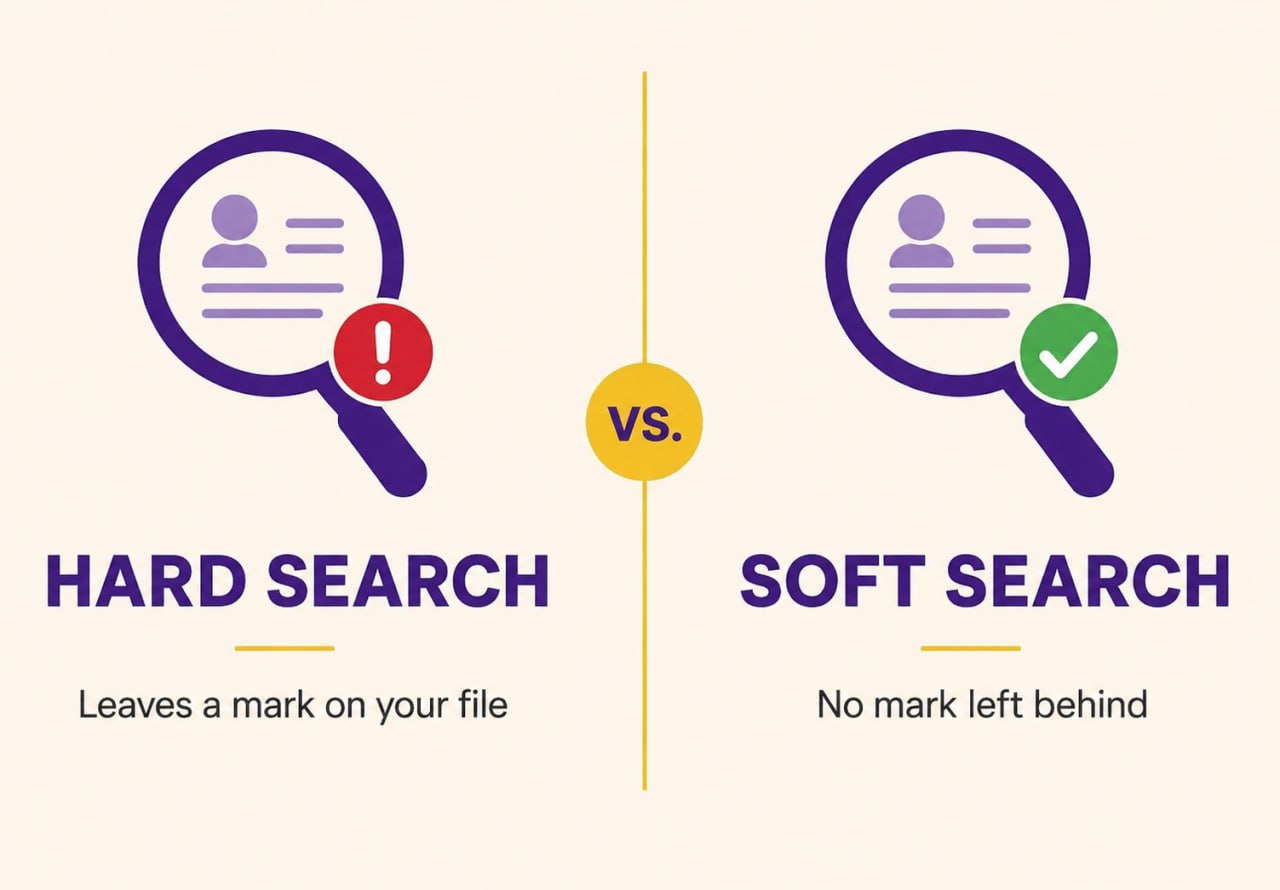
Stop applying directly to other lenders. Every mortgage application leaves a hard search on your credit file, and each hard search makes the next application harder.
A hard search is visible to every other lender who checks your file. Multiple hard searches in a short period signal desperation to lenders and lower your credit score at the same time, each declined application worsens the position for the next one.
But here's the important part: a decline from one lender is not a final verdict. Different lenders have different criteria and different appetites for risk. A specialist lender may approve exactly what a high-street lender rejected, simply because they assess the case differently.
The right next step:
- Come to a specialist broker, who does a soft search first: checking your eligibility without leaving any mark on your credit file
- Only once a suitable lender is identified does a formal application go in
Even with multiple declines already on file, the situation is harder but not impossible. A broker who specialises in bad credit knows which lenders are most likely to look past your rejection history and focus on your current position.
As an FCA-regulated bad credit mortgage broker, we soft-search the market on your behalf before making any formal application that could affect your credit file.
How Bad Credit Queen Helps You Get a Mortgage
We start by understanding your full situation. Your credit history, your income, your deposit, and your goals all shape the recommendation we make.
- Step 1. Initial review. We look at your credit history, income, deposit, and what you are trying to achieve. There is no obligation at this stage and no cost.
- Step 2. Soft search. We check your eligibility with specialist lenders without affecting your credit score. This gives us a realistic view of your options before anything formal is submitted.
- Step 3. Lender match. We match you with the specialist lender most likely to approve your specific case and show you what the realistic options look like, including rates, deposit expectations, and timeline.
- Step 4. Full application. We handle the application, all the paperwork, and all communication with the lender. You do not need to chase anyone or work out the process on your own.
We are FCA-regulated and whole-of-market. Our fee is £999, payable on application. There are no upfront fees. If we cannot secure a mortgage for you through no fault of your own, the fee is fully refundable.
If now is not the right time to apply, we tell you honestly. We explain exactly what to work on and when to come back. We would rather give you a realistic plan than waste your time on an application that is unlikely to succeed.
Ready to find out what is possible? Share your details with us and we will give you an honest assessment of your options. No obligation, and no impact on your credit file.

Market-Leading Rates
We search the whole of the market so you don't have to, with access to specialist lenders and rates not available on the high street.
We compare options tailored to your financial situation and goals, focusing on what really works for your current situation - helping you find what's genuinely the best fit for you.

Flexible Repayment Options
We help you find mortgage deals that offer as much flexibility as possible when it comes to overpaying or repaying early.
We focus on options with lower early repayment charges where available, giving you more control over your finances and fewer restrictions.
.webp)
Straight forward Approval Process
You can check your eligibility through a simple and clear process designed for speed and transparency.
We guide you every step of the way with realistic expectations and no unnecessary complications.
.avif)
.avif)
.avif)
.avif)